

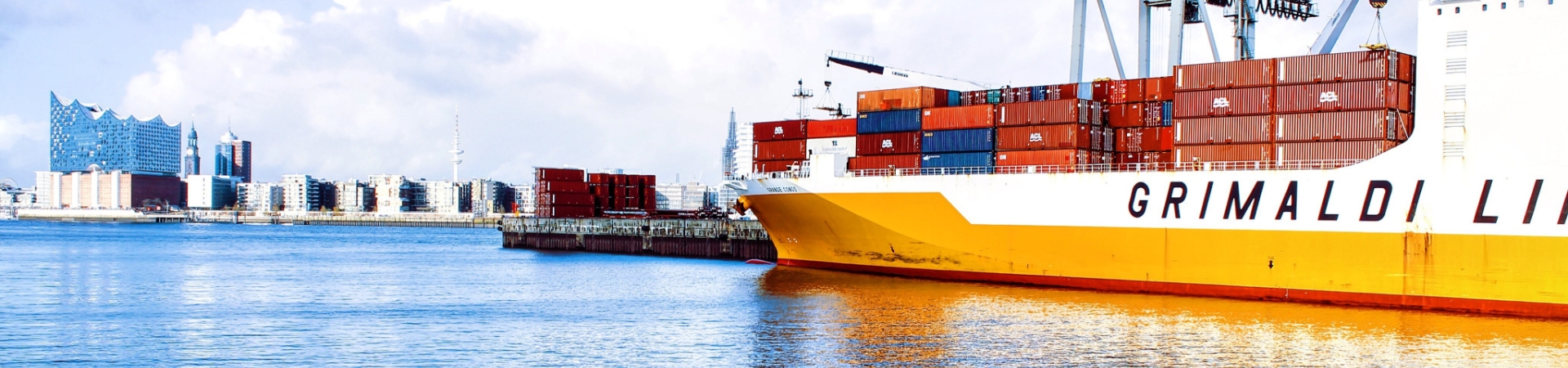
Heavy! CMA CGM announces the resumption of Red Sea navigation, and another shipping company promises safe passage of the Red Sea
2024-03-01 14:23:19
Click:
“
French container giant CMA CGM has resumed sailings in the conflict-prone Red Sea region. The company said in its official statement that after reassessing the situation in the South Red Sea, it has decided to resume Red Sea sailings on a case-by-case basis. CMA CGM emphasized that the ship's situation will be carefully assessed before each transit, but it cannot predict or announce the choice of route.
”
Notably, Oman-based Asyad Shipping Company, in a letter to customers and business partners, pledged safe navigation through the risky Red Sea.
CMA CGM stated in the announcement that ships deemed unable to pass through the Red Sea due to safety reasons will continue to choose to be diverted via the Cape of Good Hope.
Shipping analyst Lars Jensen believes that this news may cause concern for CMA CGM customers, who now need to re-evaluate whether their cargo is adequately insured.

“This of course means that shippers booking through CMA CGM need to carefully assess their cargo insurance to ensure it is valid in the risk areas of Bab el-Mandab and the Gulf of Aden, as they have no way of knowing in advance whether their cargo will be affected by the route Choice implications. This also applies to shippers booking services with Ocean Alliance partners COSCO, Evergreen and OOCL on services that may be operated by CMA CGM,” Jensen wrote in a LinkedIn post.
Of particular note, this recommendation also applies to shippers who have booked space through Ocean Alliance partners COSCO, Evergreen and OOCL that may be serviced by CMA CGM.
On February 2 this year, CMA CGM suspended sailings in the Red Sea due to attacks and attempted attacks on many ships in the area. In addition, other shipping lines such as AP Møller-Mærsk, Hapag-Lloyd and Cosco have also chosen to avoid shorter routes through the danger zone and the Suez Canal.
Now, as CMA CGM resumes sailings, market observers and analysts are closely watching the safety situation in the region and how shipping companies balance safety and efficiency.
In a letter to customers and business partners, Oman-based Asyad Shipping Company pledged safe navigation through the risky Red Sea.

The letter confirms media reports in January that an agreement involving a specific carrier with a large fleet had been reached following negotiations with parties representing or closely linked to the Houthis. Apparently, the agreement was reached in 2023 and formalized into a document to ensure protection from Houthi attacks when sailing through war-affected areas.
Asyad Group is an Omani state-owned conglomerate consisting of 16 companies with operations in major ports in three free trade zones. Including Oman Shipping Company, Oman Dry Dock Company and several shipping companies. Among them, Oman Shipping Company has a large fleet of more than 50 ships, covering various ship types such as container ships, dry cargo ships, and oil and gas tankers.
The document, printed by Oman’s Ministry of Foreign Affairs and stamped with the official seal, clearly states: “This notice is intended to indicate to customers that all ships operated and owned by Asyad Shipping Company and its wholly-owned subsidiary Asyad Line LLC are currently able to To continue safe operations in the Red Sea without hindrance to carry cargo to and from Jeddah or any other Red Sea port in the Kingdom of Saudi Arabia or Egypt.”
Since the Houthi armed forces launched their first attack in November last year, the conflict in the region has continued to escalate, and the impact on global shipping has become increasingly serious. Despite aggressive Western action to protect merchant ships, the situation remains tense. In order to avoid potential risks, more and more ships and shipping companies in various industries choose to abandon the important channels of the Red Sea and Suez Canal.

Liner giants including MSC, Maersk and Hapag-Lloyd have announced that they will avoid traditional routes between Asia and Europe. The company had to choose an alternative route around the Cape of Good Hope in Africa. Although this route adds about 6,000 kilometers to the voyage, under the current situation, ensuring the safety of the ship, crew and cargo has become the primary consideration.
However, this detour also comes with additional costs. Alternative routes not only increase range, they also lead to increased fuel consumption, which in turn generates more greenhouse gas emissions. These cost factors must be fully considered in the decision-making process of shipping companies.
Through documents and agreements, Asyad claims to be able to safely cut corners and cover multiple ports in the Red Sea region while ensuring the safety of the vessel, crew and cargo. However, despite this filing, it is unclear whether Asyad has or will be able to successfully complete the relevant transaction. Media has sought comment from the group but has yet to receive a response.

So far, small vessels rumored to be linked to Iran continue to sail the Red Sea and appear to be at no risk of attack. In addition, analysts pointed out based on ship AIS data that some global container shipping companies still maintain traditional route networks through the Red Sea and Suez Canal.
Notably, no shipping company has publicly confirmed this, other than CMA CGM. However, the companies insist they are rerouting ships to ensure safety. On the 28th, CMA CGM announced that it had resumed sailing in the Red Sea based on specific circumstances. The decision is likely to have further implications for the shipping industry as a whole, particularly in terms of assessing the costs and risks of alternative routes.
Author:
GUANGZHOU RONGXIN LOGISTICS CO., LTD
From:
Reprinted From SHIPPING Network
0
-

Freight Rate Trend Table (Past 6 months, China → North Europe, USD/FEU spot)
-
Qinzhou Port saw steady growth of ASEAN sea freight volumes in early October.
-
Yangshan Deep-Water Port of Shanghai reported stable throughput during the National Day holiday window.
-
Yantian Port in Shenzhen set a new national single-vessel container handling record
-
Huanghua Port launched its first direct China-Europe block train to Duisburg
-
Maersk released its latest Middle East shipping operational update



SHARE
Quick Links
Quick Links
Quick Links
ceo@rongxin.cn.com
+86 020-81635220/ +86 020-81635220
Room 1604,16 / F, Fortune Building, 152 Xiwan Road, Liwan District, Guangzhou

GUANGZHOU RONGXIN LOGISTICS CO., LTD
ceo@rongxin.cn.com
+86 020-81635220/ +86 020-81635220
Office 203A-2, Tairong Business Center, 63 Xizeng Road, Liwan District, China

点击右上角
分享给朋友吧
©2022 GUANGZHOU RONGXIN LOGISTICS CO., LTD
