

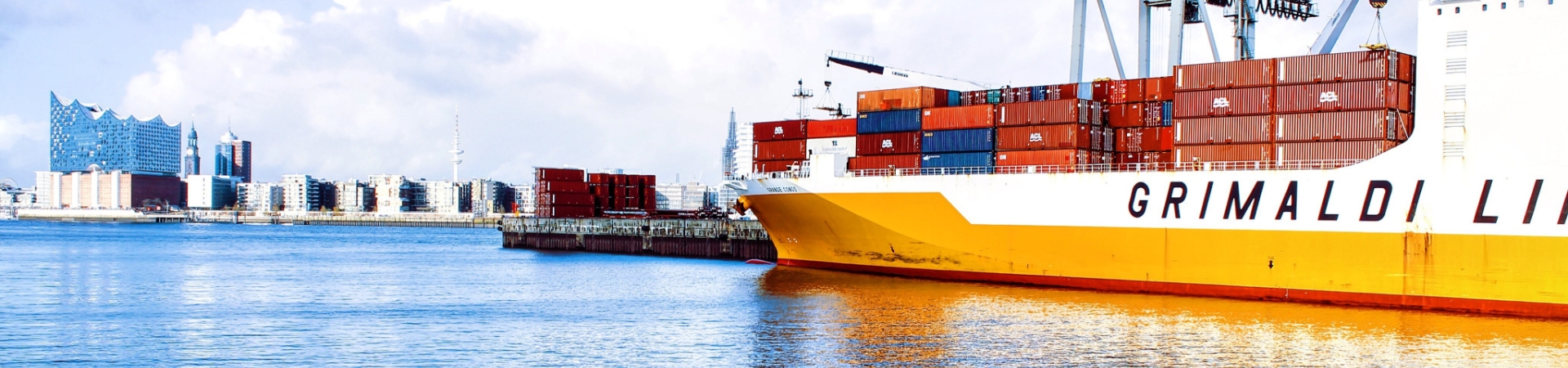
Shipping giant Maersk has suspended flights again amid fears of escalating tensions in the Red Sea
2024-01-02 11:26:15
Click:
“
Less than a week after the planned return of some ships to the Red Sea, global shipping giant Maersk has announced another 48-hour suspension.
”
On December 31, 2023, Maersk confirmed that the Maersk Hangzhou was attacked while passing through the Bab el-Mandab Strait from Singapore to the port of Suez in Egypt, "At present, the crew of the ship is safe, ensuring the safety of the crew is the company's top priority, and we have taken all necessary security measures to protect the crew." The crew will receive all the support they need to deal with this difficult and serious situation."
According to Maersk, the "Maersk Hangzhou" ship hangs the Singapore flag and is deployed on the Maersk Asia-Europe route AE12, with a design capacity of 14,000 TEU. At around 6.30pm Central European time on 30 December, the ship was struck by an unknown object while 55 nautical miles southwest of Hodeidah, Yemen, but there was no indication of fire on board and the ship was able to continue north. After the initial attack on the ship, four ships approached the Maersk Hangzhou and opened fire and attempted to board the ship. A Navy ship in the nearby waters deployed a helicopter to work with its security team and successfully repelled the boarding attempt.

In order to avoid risks, a number of international shipping companies have made the decision to suspend or detour. Maersk first announced the suspension of the Red Sea, and then plans to allow all vessels that are suspended and pass through the Red Sea area to circumnavigate Africa via the Cape of Good Hope. The Suez Canal-Red Sea, the international shipping artery, is the throat of Asia to the Mediterranean Sea and Europe. Usually, the Asia-Europe route, especially the Europe-Earth route, mainly takes the Red Sea channel, which is the main channel for Asia-Europe maritime trade.
At the same time, the recent instability in the Red Sea region has also continued to push up freight rates. On December 29, the Shanghai Shipping Exchange released a report saying that in the week from December 25 to December 29, China's export container transportation market continued to be tested by geopolitical risks, and the freight rates of Asia-Europe and other route markets continued to rise, driving the composite index up sharply. European routes, tensions continue in the Red Sea region. At present, there is a large divergence in the shipping market, and commercial shipping from the Red Sea to the Suez Canal will face great uncertainty in the coming period due to geopolitical tensions.

In terms of freight rates, the above report shows that market freight rates continue to rise sharply. North American routes, transportation demand remains stable, supply and demand fundamentals are stable, driven by the rise in freight rates of other routes, the spot market booking prices continue to rise this week. Persian Gulf route, transport demand performance is good, supply and demand fundamentals are solid. The route market continues to be affected by tensions in the Red Sea region and market rates continue to surge. The recent local demand for all kinds of materials is generally stable, the supply and demand relationship continues to improve, and the booking price in the spot market continues to rise this week. South American route, transportation demand is generally stable, supply and demand to maintain a balance, this week market freight continued to rise.
Author:
GUANGZHOU RONGXIN LOGISTICS CO., LTD
From:
Information content from the shipping network
0
-

Freight Rate Trend Table (Past 6 months, China → North Europe, USD/FEU spot)
-
Qinzhou Port saw steady growth of ASEAN sea freight volumes in early October.
-
Yangshan Deep-Water Port of Shanghai reported stable throughput during the National Day holiday window.
-
Yantian Port in Shenzhen set a new national single-vessel container handling record
-
Huanghua Port launched its first direct China-Europe block train to Duisburg
-
Maersk released its latest Middle East shipping operational update



SHARE
Quick Links
Quick Links
Quick Links
ceo@rongxin.cn.com
+86 020-81635220/ +86 020-81635220
Room 1604,16 / F, Fortune Building, 152 Xiwan Road, Liwan District, Guangzhou

GUANGZHOU RONGXIN LOGISTICS CO., LTD
ceo@rongxin.cn.com
+86 020-81635220/ +86 020-81635220
Office 203A-2, Tairong Business Center, 63 Xizeng Road, Liwan District, China

点击右上角
分享给朋友吧
©2022 GUANGZHOU RONGXIN LOGISTICS CO., LTD
