

As US sanctions intensify, Russia worries about a supply cut of Chinese cars and parts
2024-07-30 14:39:40
Click:
“
Until recently, China's automotive exports to Russia continued to grow. According to data from the General Administration of Customs of China, in the first half of 2024, China's light passenger car exports to Russia increased by 35.4%, worth $6.2 billion. Truck exports to Russia fell by 24% to $1.3 billion, but this was not enough to negate the overall positive trend of Sino-Russian automotive trade in the first half of the year.
”
The second quarter of this year was stronger than the first quarter, with exports reaching $3.9 billion in the second quarter, compared with only $2.3 billion in the first quarter.
However, the Russian industry believes that there are now signs that China's exports of auto parts to Russia may encounter obstacles, and the export of complete vehicles may also face the same danger.
Sergey Gromak, vice president of AvtoVaz, Russia's largest automaker, said that Chinese parts suppliers may limit exports to Russia to avoid the risk of secondary sanctions from the United States.
Sergey Gromak revealed at a press conference recently that recently, some Chinese companies have begun to withdraw from contracts with the leading Russian automaker, citing the threat of sanctions from the United States.

Since the beginning of 2024, Russian auto importers have been complaining about difficulties in paying Chinese suppliers. The problem has reportedly worsened after the United States expanded its sanctions criteria in June.
Over the past two years, China's dominance in the Russian automotive industry supply chain has continued to increase. Gromak warned that if Chinese suppliers begin to "withdraw" under the pressure of US sanctions, the Russian automotive industry may soon rely on local parts supply.

Although AvtoVaz has made some progress in its planned diversification of parts supply sources, the company's flagship model "Lada" still uses about 1,500 imported parts that are not made locally. They believe that the high dependence on Chinese parts makes the future of Russia's supply chain full of uncertainty.
"We don't know to what extent the sanctions pressure will be further tightened. We see that some Chinese parts manufacturers are seriously concerned about secondary sanctions. At the same time, there are problems with the payment settlement of purchased parts. Therefore, we need to consider cooperating with local Russian manufacturers because we may have no other choice in the future."
Delayed Effects
Alexey Podshchekoldin, chairman of the Russian Automobile Dealers Association, analyzed the problem of imported vehicles as an example. Due to Western sanctions, even if Russian funds arrive in China, the further flow of funds is now restricted, and Russian companies must spend months trying to recover funds and try other payment methods.
Ekaterina Kizevich, CEO of Atvira, a Russian company that promotes trade with China, pointed out that today, some Chinese OEMs continue to ship on credit, but settlement issues have not been resolved.
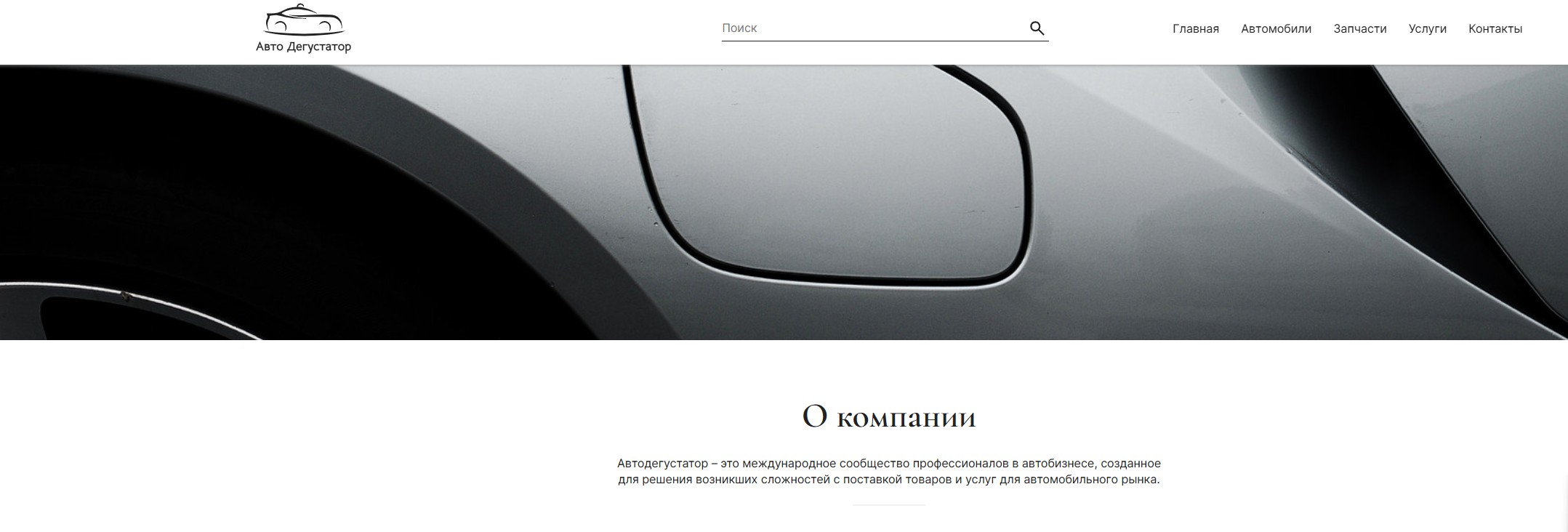
The Russian market has not yet felt the impact of the United States' recent increase in sanctions, because its impact is usually delayed. "This situation is now becoming common, and its impact will be apparent in two or three months," said Ararat Mardoyan, owner of Russian import company Autodegustator.
Ararat Mardoyan explained that Russian dealers' warehouses are almost full, and some deliveries have been paid before the new problems arise. However, he added, "Prices may rise this fall, and the range of optional models may be narrowed-the supply of mass-produced models may also be reduced."
Author:
GUANGZHOU RONGXIN LOGISTICS CO., LTD
From:
Reprinted From Explore The New Silk Road
0
-

Heilongjiang Tongjiang Port helps China-Europe freight trains improve both quantity and quality
-
Thailand elects a new prime minister. Is the political arena facing a reshuffle?
-
Breaking news! Indian ports announce an indefinite nationwide strike
-
Xinjiang's China-Europe (Central Asia) train traffic increased by 8.4% year-on-year in the first seven months
-
Breaking news! MSC container ship caught fire again at the port
-
"Container rental and freight rates remain high and will not fall back quickly"; Russian Railways Logistics ships pork products to Xi'an and Chengdu



SHARE
Quick Links
Quick Links
Quick Links
ceo@rongxin.cn.com
+86 020-81635220/ +86 020-81635220
Room 1604,16 / F, Fortune Building, 152 Xiwan Road, Liwan District, Guangzhou

GUANGZHOU RONGXIN LOGISTICS CO., LTD
ceo@rongxin.cn.com
+86 020-81635220/ +86 020-81635220
Office 203A-2, Tairong Business Center, 63 Xizeng Road, Liwan District, China

点击右上角
分享给朋友吧
©2022 GUANGZHOU RONGXIN LOGISTICS CO., LTD
