

Europe-US routes will increase by another $1,000 starting today! High freight rates cause concerns: shooting oneself in the foot
2024-05-16 09:14:44
Click:
“
The reduction and consolidation measures implemented by shipping companies during the May Day holiday have had a significant impact on market freight rates, resulting in a sharp increase in freight rates.
”
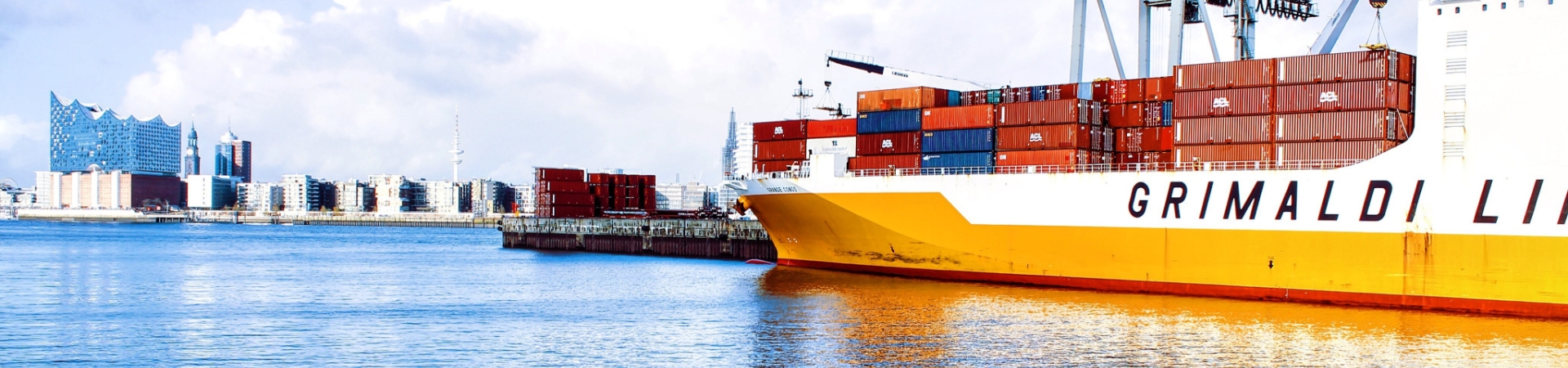
Originally, the freight rate for each large container in the West Coast of the United States was about US$4,200, the East Coast of the United States was about US$5,300, and the European route was about US$3,500. However, according to the latest news, the freight rates for European and American routes will be uniformly increased by US$1,000 on the 15th. It is worth noting that a large shipping company has notified European routes that an additional peak season surcharge of US$600 will be levied from the 22nd to the 31st of this month.

Senior executives in the shipping industry expressed concern about the continued rise in freight rates, believing that this may further reduce consumer purchasing power and bring a series of market sequelae; at the same time, the continued high freight rates not only make many freight forwarding companies and foreign trade companies unbearable, but also cause the delayed shipment of completed goods, and the goods are piled up at the port, which in turn affects the delivery of goods and the scale of subsequent orders. Mediterranean Shipping Company (MSC), the world's largest liner company, re-launched the Diamond Tier freight rate implemented during the epidemic last Friday (10th), that is, the freight rate for guaranteed space. Among them, the freight rate per large box on the US West Coast route rose to US$8,000, and the US East Coast route was as high as US$10,000, effective from May 15 to May 31. Then there are further price increases planned in early and mid-June.
Industry experts analyzed that during the epidemic, the demand for home office and study increased, which promoted the demand for related commodities, but also led to a surge in prices and freight rates, which in turn caused inventory backlogs and inflation problems. Today, the combination of the Red Sea crisis and the shipping company's control and adjustment strategy has once again led to a surge in freight rates, which makes people worry that the purchasing power of end consumers in Europe and the United States will be affected, which may lead to a decrease in orders. Repeating the mistakes of the post-epidemic demand reduction, freight rates falling to the bottom, and never recovering. Although the market outlook for the third quarter is not pessimistic at present, the industry generally worries that the peak season may not be prosperous.

Under the current pressure of overcapacity, shipping companies hope to absorb excess capacity by bypassing the Cape of Good Hope during the Red Sea crisis, and combine the control strategy to make a fortune when freight rates rise sharply, in order to cope with the possible rapid decline in freight rates in the future. However, industry insiders believe that if freight rates continue to rise and affect consumer purchasing power, the market will naturally adjust. Of course, if the Red Sea crisis can be resolved quickly, the current high freight rates are expected to fall quickly.
Author:
GUANGZHOU RONGXIN LOGISTICS CO., LTD
From:
Reprinted From Shipping News
0
-

Freight Rate Trend Table (Past 6 months, China → North Europe, USD/FEU spot)
-
Qinzhou Port saw steady growth of ASEAN sea freight volumes in early October.
-
Yangshan Deep-Water Port of Shanghai reported stable throughput during the National Day holiday window.
-
Yantian Port in Shenzhen set a new national single-vessel container handling record
-
Huanghua Port launched its first direct China-Europe block train to Duisburg
-
Maersk released its latest Middle East shipping operational update



SHARE
Quick Links
Quick Links
Quick Links
ceo@rongxin.cn.com
+86 020-81635220/ +86 020-81635220
Room 1604,16 / F, Fortune Building, 152 Xiwan Road, Liwan District, Guangzhou

GUANGZHOU RONGXIN LOGISTICS CO., LTD
ceo@rongxin.cn.com
+86 020-81635220/ +86 020-81635220
Office 203A-2, Tairong Business Center, 63 Xizeng Road, Liwan District, China

点击右上角
分享给朋友吧
©2022 GUANGZHOU RONGXIN LOGISTICS CO., LTD
