
Ambassador Fu Cong: China-Europe freight trains have become the “life channel” at a critical moment for China-Europe trade
2024-03-13 10:09:19
Click:
“
According to the website of the Chinese Mission to the EU, on March 12, 2024, Ambassador Fu Cong, head of the Mission to the EU, published an article entitled "One Belt and One Road Cooperation is a Wise Way to De-risk Europe" in the well-known European media "EU News" Signed article of "Choice". The full text is as follows:
”
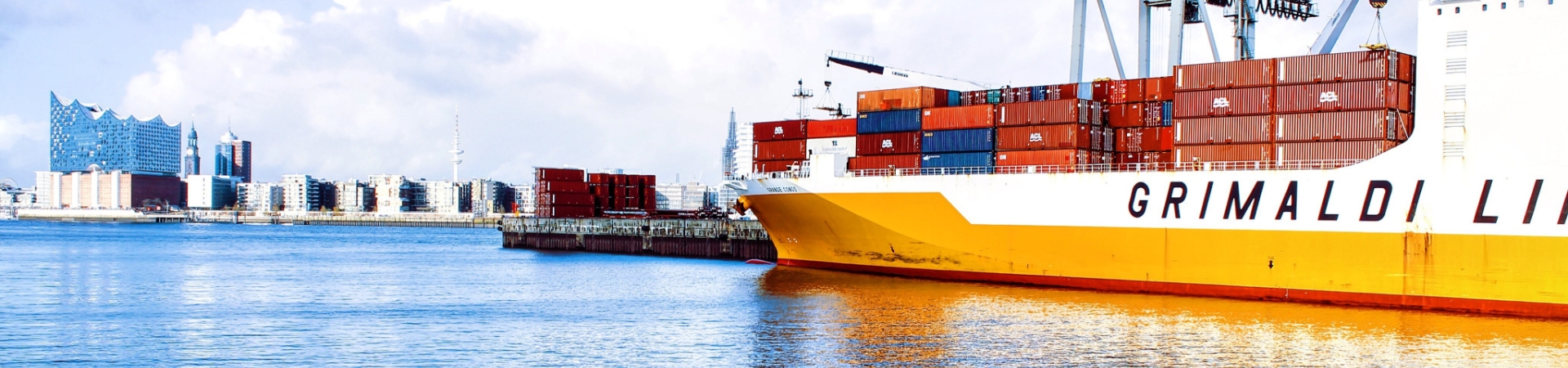
Currently, global trade is increasingly affected by the geopolitical situation. While the Ukraine crisis and the Palestinian-Israeli conflict have been delayed, a global shipping crisis has quickly unfolded under the "Red Sea Storm", putting the global supply chain once again facing severe risks.
The Red Sea is the chokepoint for maritime trade between China and Europe. China and the EU are bearing the brunt of the deteriorating regional security situation. According to statistics, 60% of China's exports to Europe need to be transported through the Red Sea. Since the regional situation became unstable, 90% of container ships have had to go around the Cape of Good Hope in Africa, adding at least 12 days to one-way shipping between China and Europe. The rerouting of routes has led to a sharp increase in freight rates. The current unit price of containers sent from Yiwu, China to Europe has more than doubled compared to December last year. The disruption to shipping has also brought more uncertainty to Europe's already fragile supply chain. The production and sales of multinational companies such as Tesla, Volvo, IKEA, and H&M in Europe have been affected.

Faced with the complex and turbulent global geopolitical situation, especially since the outbreak of the Red Sea crisis, China-Europe freight trains, the flagship project of China-EU "One Belt and One Road" cooperation, have quickly provided alternative land transportation solutions with the advantages of speed, stability and reliability, and provided a large-scale transportation solution for China and Europe. Escort the trade of goods. After ten years of development, China-Europe freight trains have operated a total of 85,000 trains, reaching more than 100 cities in 11 Asian countries and more than 200 cities in 25 European countries, providing diversified choices for Chinese and European enterprises. As the Red Sea shipping volume decreases, China-Europe land cargo transportation bucks the trend and increases. Statistics show that the number of inquiries about the China-Europe freight train business has nearly doubled, and most freight train platform companies have made predictions that "railway transportation will grow significantly in the future." It can be said that China-Europe freight trains have become the "life channel" at a critical moment for China-Europe trade. At the same time, another important component of the “One Belt, One Road” initiative—the “Trans-Caspian International Transport Corridor” that China is participating in the construction of—is also particularly eye-catching. Against the background of the Ukraine crisis and tensions in the Red Sea, freight traffic on this "Middle Corridor" has also increased rapidly, providing a solid guarantee for the security of Europe's critical mineral and energy supplies.

Some Western media recently stated that the Red Sea crisis has fundamentally undermined the stated goal of the “One Belt, One Road” initiative to “connect Asia and Europe”. In fact, on the contrary, the unique role of the China-Europe freight trains in the Red Sea crisis is a true reflection of the necessity and forward-looking nature of jointly building the "Belt and Road". The American "Foreign Policy" magazine pointed out that in a world where trust is generally lacking and crises are unpredictable, the only way to protect global common interests is to increase supply channels as much as possible, that is, to build more "belts" and more " road". What is gratifying is that, driven by China's "Belt and Road" initiative, more and more countries have recognized this and joined in drawing a blueprint for the construction of the global "Belt" and "Road".

Currently, China is promoting the joint construction of the "Belt and Road" to enter a new stage of high-quality development with the Silk Road spirit of peace and cooperation, openness and inclusiveness, mutual learning, and mutual benefit. President Xi Jinping made it clear at the 3rd "Belt and Road" International Cooperation Summit Forum that China will accelerate the high-quality development of China-Europe freight trains, participate in the construction of the Trans-Caspian International Transport Corridor, and work with all parties to build a network supported by direct railway and highway transportation. New logistics corridors for the Eurasian continent, accelerating the construction of new land-sea corridors and the Air Silk Road. From hearing camel bells, to boats looking at each other, to embracing each other under the blue sky, these ever-evolving "belts" and "roads" are gradually building an interconnection network that benefits the world, providing a more solid guarantee and diversity for the development of countries around the world. selection. China is willing to open its arms and work with countries around the world, including Europe, to tighten the "belt" of interests, open up the "road" to prosperity, and weave a "net" of close cooperation, so as to inject more stability and positive energy into a world intertwined with chaos. , and promote the building of a community with a shared future for mankind.
Author:
GUANGZHOU RONGXIN LOGISTICS CO., LTD
From:
Reprinted From ZEST SHIPPING
0
-

Freight Rate Trend Table (Past 6 months, China → North Europe, USD/FEU spot)
-
Qinzhou Port saw steady growth of ASEAN sea freight volumes in early October.
-
Yangshan Deep-Water Port of Shanghai reported stable throughput during the National Day holiday window.
-
Yantian Port in Shenzhen set a new national single-vessel container handling record
-
Huanghua Port launched its first direct China-Europe block train to Duisburg
-
Maersk released its latest Middle East shipping operational update



SHARE
Quick Links
Quick Links
Quick Links
ceo@rongxin.cn.com
+86 020-81635220/ +86 020-81635220
Room 1604,16 / F, Fortune Building, 152 Xiwan Road, Liwan District, Guangzhou

GUANGZHOU RONGXIN LOGISTICS CO., LTD
ceo@rongxin.cn.com
+86 020-81635220/ +86 020-81635220
Office 203A-2, Tairong Business Center, 63 Xizeng Road, Liwan District, China

点击右上角
分享给朋友吧
©2022 GUANGZHOU RONGXIN LOGISTICS CO., LTD
