

The crisis is difficult to solve! Freight is blocked, cargo owners are under pressure, freight rates will see real results after the year
2024-01-23 10:03:57
Click:
“
The impact of the Red Sea crisis on global politics and economy continues to expand. Recently, many shipping companies have issued warnings that the Houthi armed forces have attacked merchant ships, the Lebanese Hezbollah has intervened, and the Iranian militia and the US military have exchanged fire in Iraq. These incidents may evolve into regional conflicts. At the same time, the problem of rising freight rates caused by ships detouring around the Cape of Good Hope has also begun to emerge. Co
”
Industry insiders believe that the key depends on the resumption of work in Asia after the year and the timing and volume of orders in Europe and the United States. Freight rates may see real changes as early as mid-to-late March.
Based on crew safety concerns, Nautilus, a large crew union representing more than 20,000 crew members around the world, recently announced that starting from the 19th, if crew members work on ships associated with the United Kingdom and the United States, they will receive double benefits while passing through the most dangerous areas of the Red Sea. times the daily salary. Additionally, crews will have the option to disembark before reaching the highest-risk areas of the Red Sea.
Prior to this, shipping companies such as Evergreen and Yang Ming had already made salary adjustments for crew members. Zheng Zhenmao, chairman of Yang Ming Shipping, said that the duration of the Red Sea crisis is difficult to predict and the information in the shipping market is chaotic, which once caused the anxiety of many cargo owners to make repeated bookings. Currently, the container shipping market is still facing the problem of overcapacity. Yang Ming Shipping adopts a prudent strategy and currently does not consider actively chartering ships to seize the market like some other shipping companies.
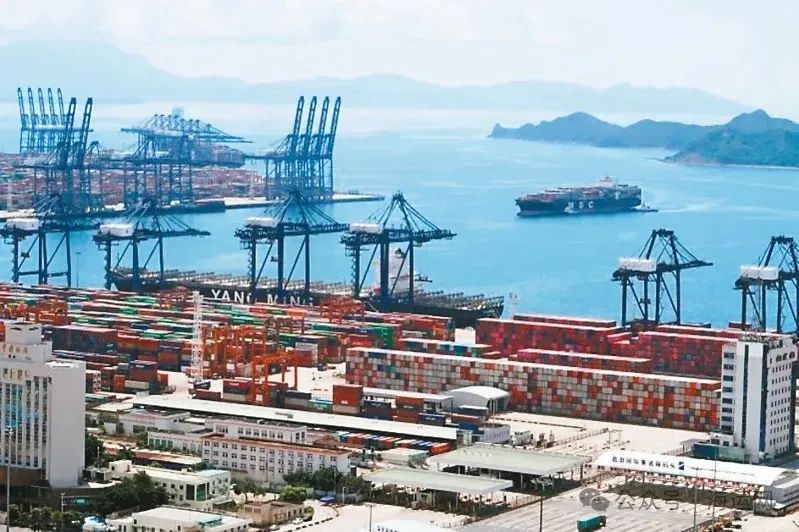
New variables may emerge at any time in the Red Sea crisis, raising concerns that it may evolve into an ethnic or religious war. In 2024, variables such as geopolitics, climate change, inflation and interest rate increases will still exist, which will bring both opportunities and challenges to the maritime industry. The opportunity lies in the industry being able to earn additional revenue generated by the crisis; but at the same time, market conditions are more unpredictable, and geopolitical tensions and rising raw material prices have pushed up oil and commodity prices, causing an impact on the demand side.
According to foreign media reports, the Red Sea crisis has brought delays and rising cost pressures to domestic exporters, which may have a chain reaction on some suppliers with razor-thin profits. Some European customers have already reported that they have requested to suspend shipments and wait until the situation becomes clear before making decisions.

Asia's year-end shipments are mainly concentrated in January, and as the Lunar New Year approaches on February 9, many factories have stopped working for holidays. According to industry insiders in the freight forwarding industry, the number of bookings in February has decreased. It is expected that container ships will return to Asia to load cargo during the Lunar New Year or 2-3 weeks after the new year. In response to this situation, some shipping companies have begun to reduce prices to attract more cargo to prepare for shipments during and after the Chinese New Year.
As for whether shipping companies can make a fortune from this wave of Red Sea crisis, many shipping companies and freight forwarding industry insiders believe that the key depends on the resumption of work in Asia after the year and the time and quantity of orders placed in Europe and the United States. They pointed out that the continued stability of high freight rates requires sufficient cargo volume to support it. Therefore, we may not really see changes in the market until mid-to-late March at the earliest.
Author:
GUANGZHOU RONGXIN LOGISTICS CO., LTD
From:
The content comes from the shipping website. Infringement will be deleted.
0
-

Freight Rate Trend Table (Past 6 months, China → North Europe, USD/FEU spot)
-
Qinzhou Port saw steady growth of ASEAN sea freight volumes in early October.
-
Yangshan Deep-Water Port of Shanghai reported stable throughput during the National Day holiday window.
-
Yantian Port in Shenzhen set a new national single-vessel container handling record
-
Huanghua Port launched its first direct China-Europe block train to Duisburg
-
Maersk released its latest Middle East shipping operational update



SHARE
Quick Links
Quick Links
Quick Links
ceo@rongxin.cn.com
+86 020-81635220/ +86 020-81635220
Room 1604,16 / F, Fortune Building, 152 Xiwan Road, Liwan District, Guangzhou

GUANGZHOU RONGXIN LOGISTICS CO., LTD
ceo@rongxin.cn.com
+86 020-81635220/ +86 020-81635220
Office 203A-2, Tairong Business Center, 63 Xizeng Road, Liwan District, China

点击右上角
分享给朋友吧
©2022 GUANGZHOU RONGXIN LOGISTICS CO., LTD
